hayes inc productions on amazon.com

Showing posts with label blogging. Show all posts

Friday, June 27, 2014

Five points to review before publishing your next blog post

Five points to review before publishing your next blog post

Mickey Baines Jun 9, 2014 How To


Mickey Baines is the President & Founding Partner at Fourth Dimension Partners, a higher education consulting practice. In addition, he appears regularly as an on-air guest for QVC and co-hosts a local TV show in central Pennsylvania. You can tweet Mickey @4DPartners.


If you know me, or been on my site, then you know I am a believer in blogs as a tool to build your expertise, increase your leads and cultivate your prospective clients. Yet, I learned about blogging the hard way – on my own through trial and error. It took me a while to find my writing style, even longer to compose posts that were truly worthy of my readers’ time and finally, to infuse the right keywords naturally to begin improving my site’s optimization.


#462943209 / gettyimages.com
So, before you publish your next post, do yourself a favor and make sure you’ve done these five things:

1. Content: Have you written a post that answers questions your prospective clients actually have. The point of a blog is to create content that interests your prospects. So, you need to identify topics that help you keep them on your site. You don’t have to look hard. Just look at the questions prospective clients ask most often. You can also consider the questions your current clients ask – especially those that come during the on-boarding phase of your work.

That may generate an idea that eases a prospect’s mind – a prospect that is nearing the purchasing decision phase of your development process (I prefer to call it the buyer’s journey – with appropriate given to Hubspot (link to www.hubspot.com) for the term). Once you have a topic that your prospects will find interesting, be sure to provide content that shares your view and analysis of the topic, and find a way to differentiate yourself and your point-of-view in a that makes your post stand out from others.

2. Title: Don’t worry about the title until you’ve written the post. Don’t get me wrong – the title is critical in your post’s success, but wait until you’ve finished the post before deciding on a title. You may find that the topic becomes modified as you continue to write, or find a keyword that organically emerges from your post. Once you’ve finished the post, then take a good amount of time reading and re-reading the post and consider titles that draw readers in. What have you written about? Have you given advice (5 tips to improve your blog), analyzed a piece of news (What Google’s Panda 4.0 release means for your website), etc. I generally put together a draft title to use as I begin a post. But I do this because I may begin writing multiple posts at a time, and it may be a month or two before I come back to re-write the draft into a final piece and get it ready to be published. Having a draft title helps keep me focused on the content’s purpose as well as finding the draft when I need it. (FYI – I use the Evernote app (link to www.evernote.com) to keep all of my draft posts.)

3. Keywords: Don’t force any keywords while you write the post. Wait until you’ve finished, then identify one or two keywords you’ve already identified for your site that fit most naturally with the post’s content. Can you find a spot or two where they fit? Once you get them inserted, be sure to have someone else read it. Make sure the inserted keywords seem natural and not forced. If it appears forced, your readers will catch it, and so will Google.

4. Call-to-action: As your reader finishes your post, what do you want her to do next? How can you keep her engaged? Do you have an offer for a download, webinar, or if appropriate, a free or discounted product for purchase that may be connected to the topic? Do you have any links that can connect your readers to other related posts? The goal is to keep them interested and on your site.

5. Review and review again: To be honest, this is my weakest point. But you need to review your work, and read the post at least two more times before you post. Of course, look for spelling and basic grammatical errors, but also look for the flow in your piece to make sure it makes sense and reads well.

Check the length of your post. If it’s fewer than 400 words, look to see if you can expand on the topic. In so few words, have you offered any insight or information that your reader can’t find 100 other places. And if they can, keep in mind that those other places probably have more thorough and useful information than you do. Have a colleague or co-worker read it to be sure they get your point and find the content and title interesting and worthy of the time your prospect will invest.

Also ensure your post isn’t too long – under 1,000 words. Your readers will typically only give you 3-7 minutes of time – unless of course, you are a brilliant writer that can very naturally engage readers for a longer period of time.

What did I miss? Share your ideas and additional tactics to consider before you publish your posts.


Saturday, September 21, 2013

Word shuffle


First write a few random words on some index cards or small pieces of paper, one word for each. Then mix them up and place two side-by-side. Try as hard as you can to come up with a new idea from the two resulting words.
This creative idea is great in so many ways, and you never how people really use this idea to come up with some of their ideas. Song writers, authors, poets, and I use on a daily basis, but my problem I can't remember everything that I come up with LOL. But like I was saying everyone is most likely to be using this creative idea themselves. So why not you. Give a try to see what you come up with.

Wednesday, September 11, 2013

Drop assumptions


Write a list of assumptions down about your topic. Then try to imagine what would happen if you removed them individually or in combination.
Ok I know that the saying that goes about assumptions. But filter out the assumptions about your latest project, or creative idea. Either follow those assumptions and move on, or look forward to venturing out into the unknown and see where it may take you in your career, or hobby.

Heyku 14

20130908-102719.jpg

Had a good night staying up with my girl. And I was drinking this night the entire time. We were just chilling and talking. It was a good night for us.


Tuesday, September 10, 2013

Heyku 13

20130905-005118.jpg

I was just having a good, quiet time with my girlfriend while we were both off from work, and found the motivation to clean up the house a little bit today. Most of the day was watching tv, and sleeping in while the kids were in school. And very happy with my decision for being with her.

Saturday, September 7, 2013

How To Make A Music Website Like Ed Sheeran, Case Study Part 1


How To Make A Music Website Like Ed Sheeran, Case Study Part 1

BY: SHAUN LETANG 
Hey guys, today I’m going to show you how to make a top music website which will allow you to better turn visitors into fans, capture their details for future contact, and effectively make more money from your music career. I’ve already show you how to set your site up from scratch, so I won’t be talking about that again (use that guide if you haven’t already got a music website). What I didn’t cover in that guide however, is how to structure your site to make the most of your visitors.Having your own website as a musician is vitally important, as it provides a piece to thesales funnel you simply can’t get with social sites like Facebook and Twitter. Add a mailing list to your site, and you’ll be able to find your most interactive and valuable fans much more easily.That said, you need to structure your site correctly for it to have these benefits. All too often a good looking design is put up, and the site stays looking the same for the rest of it’s life. Just because it looks good though, it doesn’t mean it’s laid out properly for maximum fan conversions and retention. A bad layout and site structure can mean you’re not retaining anywhere near as many fans as you could have other wise, and your site may even be turning would be fans away. Both of these things lead to less buzz and income for you.So how should you be laying out your website? Well, to help you better get a idea of what a good site structure looks like, I’ve picked a site I think does quite well in terms of getting fans interactive and keeping in contact with them.The site in question is the Ed Sheeran website. If you’re not sure who that is, have a look at his website for the lowdown.
Here’s a look at Ed’s website’s home page as it is at the time of this case study. Click the image to see a larger one pop up in a new window:
Ed Sheeran music website
As well as looking at what this site does well, I’m also going to look at what I would do differently and why.
The aim of this guide is to show you what goes into making a top website for your music career, mainly in terms of layout. If you’ve already got your own .com website (or .co.uk / .ca etc) then you can use this guide to help you better structure your existing site. If you haven’t already got a site (I’m not talking a Facebook page here), you really need one. I’ve already put out a guide on how to set up your own professional site quickly and easily, so if you haven’t got one yet, first get one sorted in the next 20 or so minutes using that guide. Then come back here for an idea of the structure you should implement.
So now you know what we’ll be doing, let’s have a look at what goes where on Ed Sheeran’s website and why.

The Video On The Front Page

The first things I want to mention about Ed Sheeran’s website, is the video he displays near the top middle of his home page. This is what most people will instantly notice when they visit for the first time. Not only is it in a prominent position, but it’s also eye catching.
In this space, Ed puts his video playlist. The reason for this is simple: video is one of the best ways to get people interested in what you’re offering!
Think about it, how many times does it take you hearing a song before it sticks in your head? While it’ll only take one listen for some songs, in general it usually takes two, three or more. On the other hand, usually if you see a good video, you remember it instantly. It’s also a lot easier for most people to get hooked watching a video, over hearing a song for the very first time.
Of course this is generalizing as everyone takes in music differently. But as a general rule, video and music grabs people’s attention a lot quicker than plain audio does.
My bet is that this area is one of the most popular on the website’s home page.
One more thing to note about this area is that the embedded video also contains a playlist. So if you’ve seen the first video he displays, you’ve the option of looking through his other material either for something you haven’t seen before, or for your favorite song of his.

Social Boxes In The Right Sidebar

Social proof in the sidebarThe next thing I want to look at are the social boxes in the right hand sidebar of his website. He displays a Facebook ‘like’ box showing how many Facebook fans he has, as well as a Twitter follow button above it at the top of the sidebar.
There are two main reasons for this:
  1. Social Proof.
    People like reassurance that what they’re doing and what they’re into is socially acceptable. Social proof is a way of convincing people this is the case, and is a good way to get people to become a fan of your music much quicker. If you see that your friends has already liked Ed Sheeran’s facebook page for example, you’re more likely to click and like it yourself. And if you see that almost 3 and a half million people already do like him, most people would take that as a sign that he’s talented and worth looking into some more. Even if you haven’t heard his music before but then hear he’s got 3,404,045 Facebook fans (which he has at the time of writing this), chances are you’ll be that much more likely to think there’s something too him, and want to hear for yourself.
  2. He’s Working On Building Up His Social Following.
    When you’re building up your audience, it’s very important to retain the people that arrive on your website. If they come but you don’t get them either on your mailing list or social sites, the chances that you’ll get them on your site again will drop greatly. If you did get their contact details in some form however, you can contact them when something new and exciting is happening, and send a wave of your fans where you want them relatively easily.
While Ed has both the option to sign up to his mailing list and social sites on his website, he’s chosen to focus more on building up his social presence than collecting email addresses. This is shown by where he places both his social profiles and mailing list opt in box. His social profiles are near the top of the page in one of the first places people usually look (the top right hand side of the sidebar), while you have to scroll down the page to see his newsletter opt in box (also known as ‘below the fold’). On top of that, the mailing list sign up box is on the thinner left hand side sidebar.
I personally feel it’s better for musicians to focus evenly on both their mailing list and increasing their social presence, but you can do one or the other if you like. That said, I feel it’s possible for Ed to increase the amount of email addresses he collects without it affecting the growth of his social presence too much. I’ll explain how a little bit later.

The Top Nav Bar

When internet surfers visit a website, they often expect to see the website’s navigation bar in one of two places:
  1. At the top under the header, or
  2. At the top of the left hand sidebar.
As a lesser rule, nav bars on the top right hand side of the sidebar are also becoming increasingly popular. If you don’t have your nav bar in one of these place, you’ll often confuse your website’s visitors more than you need to. And when your website confuses people, people leave.
In the space where the top navigation bar usually goes, Ed (or his website creator) has chosen to put two things:
  1. His music player.
  2. A link to all his social profiles.
Again, this shows that he’s actively building up his social presence. It’s not common for websites to have these kind of links directly under the header, so it shows he wants to get people to join his social sites wherever possible.
The music player provides visitors another way for people to listen to his music. Even though people have the option to view his videos when they first come on, not everyone has fast internet, and may not be able to play these videos for this or another reason. The music player helps with this; songs don’t take as much internet usage to play as videos do, so more people will be able to hear his material over if he was to display video alone.

What I’d Do Differently 1

As I’ll look into more later, his mailing list opt in box is a lot lower down the page in the left hand sidebar. The sidebar navigation is directly above that. I would personally take the social icons out of the top nav bar, and place the sidebar nav links in the area for the top nav. I’d then move the mailing list opt in form to the top of the left hand sidebar, and put the links to the social profiles below the mailing list opt in form in the left sidebar.
I’d do these things because, even though he’s mainly focusing on getting social followers, building up your mailing list is still very important. I’ve already looked at why this is andhow to build your list here, so I won’t go into that again.
Ed already has his main social profiles prominently displayed on other parts of his website (Facebook, Twitter and Youtube), so having these links here seems to be a bit of a waste of space. By moving these links, he’ll still get his social sign ups from other parts of the website, but he’ll also most likely increase his list subscriber numbers as it’ll be in a much better position.
On top of this, by using the structure I mentioned, it’ll also mean he has links to his social profiles both above and below the fold. While it can’t be confirmed either way until tested, this may actually increase the amount of people he gets clicking over and signing up to his social sites.

The Side Navigation

The sidebar is important when building a music websiteThe next part of this music website we’ll look at is the left hand side navigation. I want to point out the order in which the links to each page are in. They go as follows:
  1. Home.
  2. News.
  3. Live Dates.
  4. Photos.
  5. Videos.
  6. Lyrics.
  7. Contact & Links.
  8. Store.
While a lot of things can be drawn from this ordering of pages, there’s one key things I want to point out: His store page is listed last!
Now while some may assume this is a bad move and that he should be trying to sell people things asap to make money from them, I disagree. I actually thing this layout is pretty smart.
All the links above the store page are there to get people to find out as much as they can about Ed Sheeran, and really buy into what he’s doing. They can hear his music, see his videos, see what the latest news with him is, see where they can see him live and the like. Then after they’ve taken all that in and are now a real fan of his (if they’ve got that far and are still browsing they can be classed as a fan), they’re directed to the shop page where they can buy some of his songs and merchandise. Of course, here he offers them some cool goodies they can’t get without coughing up the money.
If he was to send people straight from the home page to the store page, chance are a lot more of his visitors would ‘bounce’ off that page and leave without buying anything. By giving them knowledge and the chance to really buy into his movement however, he increases the chance that they’ll want to at one point get involved with him on a financial level.
By displaying your store page last, you won’t generally lose out on sales. If someone really wants to find your store before they’ve gone through every link, they will. So don’t be in a rush to sell straight away. That said, always give them the option to buy and make it easy for those who are ready to invest in your music. If you haven’t yet got something to buy on your website, you’re missing out on a big opportunity.
Side note: By Ed showing his live gig dates quite high up in the nav bar, not only is he encouraging people to come out and see him live, but that’s also another way he’s monetizing his music career. When you go onto his Live Dates page, you see both details of his live shows, as well as have the option to buy tickets to these shows in question. It’s not done in a forceful way, but the option is there for those who are ready to take that step.

How To Make A Music Website Like Ed Sheeran End Of Part 1

Even though we’re only half way, above you’ll find plenty of handy tips you can use and apply to your own music website. If you haven’t got a site yet, I suggest you make one right now using my guide on how to create a music website using Wordpress. In it I walk you through the steps which will get you a professional looking website up within 20 or so minutes. It’s the same process I used to make my own sites, so give it a go.
Next week I’ll post part two of the guide, and look at the remaining features of Ed Sheeran’s website. What it does well, and the areas I feel it can improve on. If you want to be informed of when that’s out, be sure to sign up to my newsletter here. You’ll also get a free ebook on music marketing for doing so. :)
Shaun Letang,
Music Industry How To.

Saturday, August 24, 2013

Heyku post 2


20130823-055458.jpg
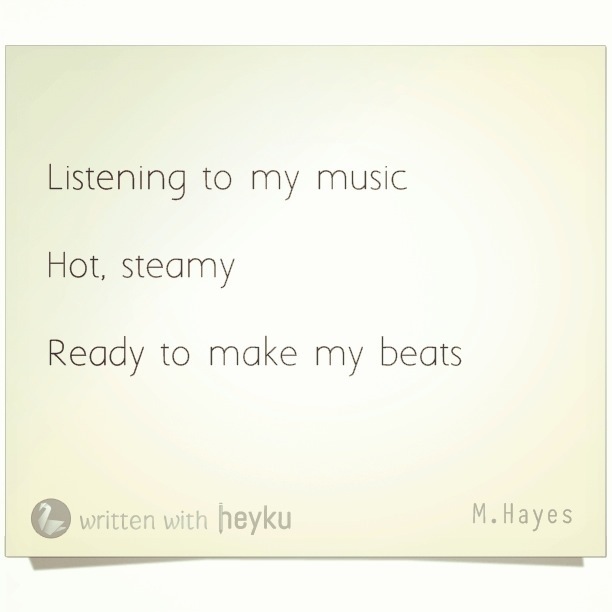
In line number one: "Listening to my music" at this time I was preparing to make, or to improve on beats, or music that I had composed before. So what I was doing was actually getting ready to copyright the music, and artwork that I had done in the past. Second line: "Hot, Steamy" it was hot outside that night when I wrote this. The third line: Preparing for possibly making new beats which didn't happen that night, but was still feeling accomplished cause I had copyrighted everything that I wanted to that night, and then because of the time, I only published one of the songs that I copyrighted that night.

Heyku Post 1


20130823-055240.jpgThis is a new piece that I want to start called Heyku Posts. Well this is from a new app that I have found through in iTunes app store and it is called heyku where you go onto the site and you can freely write your own heyku of you own, or the app can guide you through it. And when you're done with it. In the above picture is what you will come up with. So I would like to start sharing them here on my wordpress blog site. So please leave comments and let me know what you think. Also, I will also shed some light on what all these heykus mean while I was writing them. In the first line "No one will listen to me." I was feeling like I could saying to anyone and I will still get the same result which was nothing at all.
In the second line, I felt like I wasn't doing nothing at all. Even I was in my own world at the time. In the third and final line, I was working on coyrighting my music on the internet, and also publishing my music as well. So even though I wasn't doing anything, I was accomplishing everything in my music.
Add caption

Wednesday, August 21, 2013

49 Ways to Get Free Music Promotion


49 Ways to Get Free Music Promotion

This is a guest post by Marcus Taylor, a musician & founder of several music industry projects, including The Musician’s Guide, Music Law Contracts, and Music Job Board.
There’s no shortage of lists on how bands can get free music promotion, but I’d like to add one more. My hope is that this one is a bit more up to date, and shines light on some of the great free tools that have emerged in the past 2-3 years. If you have any other great tips for promoting music for free, feel free to add them in the comments below!
#1 Host a free virtual show With Stageit.com
Stageit.com has long been one of my favourite music marketing tools. The fact that it’s free is just the icing on the cake. If you’ve not used Stageit before, it’s essential a ‘Skype for bands’, where you can perform gigs from your kitchen to fans all over the World. Many good friends have used it and also found that it was a good way to raise a few hundred dollars for a couple of hours of performing.
#2 Add a Bands In Town app to Your Facebook Page
BandsinTown is a must-have app for your Facebook Page. In short, it displays all of your upcoming gig dates in a slick-looking Facebook App. A great way of passively raising awareness of your upcoming shows.
#3 Create a FanDistro project to help charities & reward your fans
FanDistro is another favourite of mine. After creating your project page and sending it out to your fans, each fan receives a unique link, which they can send to their friends. If their friends then share your music or buy any of your products, they are rewarded with free merch and 20% of the sales go to a charity in the fan’s name. FanDistro is a brilliant way of increasing your social media engagement – artists like Cosmo Jarvis generated ~19 new fans for each fan who shared his music on the site!
#4 Build an app for your music with BandApp
Created by a good friend, Adam Perry, BandApp is a great platform for getting a free mobile app for your band.
#5 Find some gigs using BandWagon
Bandwagon is a fantastic platform for finding gigs and applying for them for free online. Currently UK focused only.
#6 Upload your music to Soundcloud
Soundcloud is arguably one of the best sites to host your music on, especially now that they’ve announced heavy integration with many of Google’s services. If you haven’t already, upload your music on Soundcloud, tag it well, and encourage fans to leave comments on the tracks.
#7 Run an Adwords Campaign (with a £75 free voucher)
I have to admit, Google Adwords tends not to be a very effective way to promote music, as you’re relying on people clicking on your ad when they’re searching for something else. However, Google do offer free £75 vouchers (which you have to pay £25 to activate), so it might be worth a try. If it were me, I’d spend this on targeting terms like “gigs in London” if I had a gig coming up in London, or on similar artist terms like “bands like Metallica”. It’s a long shot, but it may work!
#8 Shoot a video & upload to video hosting sites via One Load
Oneload is a huge time saver that can help you get more exposure from your videos. It’s completely free and enables you to upload your video to 15+ video hosting sites, such as Vimeo, YouTube, Viddler, and MetaCafe, all in one click. You no longer have to waste hours upload them one by one – and ultimately your video appears on more video hosting sites, enabling you to reach a slightly larger audience (some ‘niche’ video hosts receive a surprising amount of traffic).
#9 Create a professional EPK using Presskit.to
In my opinion, presskit.to offer the slickest looking press kits currently available to artists. If you want to send your music to promoters, press, and others in style, creating a free presskit.to EPK is a must. What’s particularly nice about these EPKs is that they’re designed responsively, so they look great on any device.
#10 Search through Reverbnation’s opportunities and apply
There are a lot of services like Music Xray, Sonicbids, and Reverbnation who list opportunities for artists to apply to. They’re all great – and I recommend giving them all a shot, but Reverbnation is probably the most extensive feed of opportunities. The downside is that it’s probably also the most competitive. If you have a few minutes spare, have a scan over their opportunities here, and apply to any that look like a good fit.
#11 Apply to play at MIDEM’s upcoming festival
Every year Midem puts out a call for bands to play at the annual music industry conference. This is an excellent place to promote your music & learn about the industry.
#12 Create a Dizzyjam store & sell your merchandise for free
Dizzyjam is a free service that allows you to build a merch store to sell your merch directly to fans online. They take care of all the printing and shipping, you just upload your designs and you’re ready to go.
#13 Reward your fans & raise money using Pledge Music
Pledge Music is a great service for simultaneously raising money for your release (or tour, or video) while developing loyalty with your existing fan base, by offering them cool experiences and gifts for ‘pledging’ on your campaign.
#14 Find 3-4 relevant forums & get stuck into the community
There are literally hundreds of forums for musicians on the web. Pick 3-4 and actively participate in the community. You’ll ‘meet’ lots of like minded artists, and find lots of good tips on getting gigs, and building your fan base.
#15 Setup a fangate for your Facebook Page using Woobox
I’m a big fan of Woobox, and have used it many times to increase social engagement for my projects. While some of their tools are paid, you can quickly install a like gate and run basic social competitions free of charge. Like gates area good way of encouraging people to ‘like’ your Facebook Page, in return for accessing some exclusive content, such as a free download.
#16 Use search.twitter.com to find & talk with potential fans
Twitter is an exceptionally powerful tool when used correctly. I encourage all artists to learn how to use search.twitter.com to their advantage. Use it to find potential fans in areas where you’re performing – or similar artists who may be able to connect you with promoters or good contacts. The unique thing about Twitter is that it’s not unusual to reach out to people you’ve never spoken with, making it a great way to break the ice with potential fans, and contacts.

#17 Schedule some tweets using Hootsuite
When you have a few minutes to spare, logging in to Hootsuite and scheduling a few tweets can be a great way to ensure that you’re continually communicating with your fans. For artists with a global audience this is particularly important as it means you can reach fans on Twitter in different time zones.
#18 Write a guest blog post on a high profile music blog
There are a handful of artists who I only know because they blog heavily on music industry websites. Tommy Darker, Brian Hazard, and Simon Tam are all musicians who I probably wouldn’t have connected with if it weren’t for their participation on blogs like Music Think Tank. If you enjoy writing and have some constructive criticism or ideas on improving the way in which the music industry functions, why not put a post together on one of these sites?
#19 Create a list of relevant bloggers & befriend them
In most genres there is still a collection of music bloggers who influence the listening decisions of many people. This is most certainly the case in the R’n’B and hiphop World. Use sites like Hypem to create a list of potential bloggers, and then begin communicating with them (but don’t jump straight to promoting your music).
#20 Create a list of promoters in your area & befriend them
You’d be surprised how quickly you can compile a list of all the key promoters in your town. A few years ago I had the (tedious) task of doing this for the whole of the UK, and that took about 8 hours. That said, it was worth it. Start building a database of promoters in your area, and then create a plan to be-friend them, perhaps by adding them to a Twitter list and talking with them, or inviting them for a coffee / lunch.
#21 Write a sponsorship proposal & email 10x local companies it
Sponsors can be a great help in providing your band with a bit of extra cash. The key is to understand what you can do that will help to grow their business. If you have a small number of fans, pick a local sponsor that doesn’t make you seem like a sell out (alcohol sponsors are always a good choice). The more fans you have, the more options there are.

#22 Find some zero-cost promotional partnerships
I’m a huge fan of zero-cost promotional partnerships. This is where you partner with someone and offer them a favour, in return for them offering you a favour, for free. A great example may be to speak to local stores and ask if you can put up posters in their store, in return for you promoting their services or listing them as a sponsor for an upcoming gig.
#23 Find a list of upcoming music industry conferences
Music industry conferences are a goldmine for artists. Not only do you have the smartest minds in the industry sharing their case studies and tips on what does and doesn’t work, but you’ll also meet lots of music industry contacts. Check out this list on music industry conferences, pick one, and go! If you want to keep it free of charge, stand outside the front and just chat to people as they walk in / offer them demos. You’d be surprised how few artists do this, and how valuable an opportunity it is.
#24 Set up a charitable event
While there are many altruistic benefits to supporting great causes, it’s also a fantastic way of getting the support of local press. Host a charitable concert, donate album sales to a charity, or even use something like Reverbnation’s Music for Good.
#25 Set up a mailing list on Mailchimp
If you don’t have a mailing list set up, fix that. Now.
#26 Get some free business cards & use them as download cards
There are many services like Vistaprint that offer free business cards. A cool trick is to order several hundred of these with a custom design that includes a URL to download your music. This can be a cost effective alternative to download cards.
#27 Start your own blog
I’ve written about why artists should blog before, but in short, it’s one of the best ways to build up a passive audience, communicate with your fans, while getting countless opportunities for you and your music. The only thing I will point out, that I’m sure many bloggers will confirm, is that you really do get out what you put in. Sticking a few rambles up on Tumblr is not going to cut it.
#28 Build relationships with key bloggers by commenting on their blogs
There are many people who I only know through them commenting on my blog posts – some of them have become very good friends over the years. For the sake of a 30-60 seconds, commenting on other blogs can be a great way to plant seeds, that may blossom into fruitful relationships.
#29 Give your music away for free on torrent sites
This one is slightly controversial, and I understand not everyone will like the sound of it, but I’m of the belief that your music is your business card. Sure, it costs money to make and you want to redeem that money, but I think a longer-term strategy is more valuable here. Seed your music on torrent sites, and encourage it to be shared far and wide. The more fans you have, the easier it will be to negotiate better gigs, sponsorships, and other high value opportunities.
#30 Find DJs to remix your music & post their mixes on Mixcloud
When I began my career as a dance music producer (after years of drumming in a metal band…?!) I managed to get my music released on various labels by offering to remix their existing artists. I’d simply approach a label and say “Hey guys, I’d love to do a remix of your artist X on the house. If it’s of interest could you fire over the raw files and i’ll get to work”. It worked so effectively because it was essentially free promotion for the label’s artists. Looking at this from the other side, try to get DJs to remix your music, and then you (or they) can then promote this on sites like Mixcloud.
#31 Read some music marketing blogs to sharpen your skills
There are many fantastic people sharing their tips on what does and doesn’t work in music marketing. I recommend following Brian Hazard’s passive promotion blog, Michael Brandvold, and Ariel Hyatt. Follow these guys and you’ll be in good hands.
#32 Learn what’s working and what’s not with Next Big Sound
Despite my reservations against vanity metrics, I am a big fan of Next Big Sound. If you use it correctly, you can identify lots of handy information on what is and isn’t working in your music promotion strategy.
#33 Set up Google Alerts
All bands should have Google Alerts set up on their band name – find out what fans are saying about you online by getting a real-time or weekly summary of all mentions of your band name across the web.
#34 Be active on niche social networks like Pinterest
Despite being largely populated by foodies and interior decorators, Pinterest receives huge amounts of traffic, and is relatively uncompetitive for musicians. The challenge with promoting music on Twitter and Facebook is that you’re competing with every other band – this isn’t the case on Pinterest. Remember, the hardest place to sell a book is in a bookstore.
#35 Record a cover of a popular song & upload it to YouTube
A lot of artists I know are very against recording cover songs, as they feel it comes across as selling out, or not being able to write original music. Some of the more successful artists I know use covers in an incredibly smart way – to attract the attention of likely fans, and introduce them to their original music. There may be 100,000 searches on YouTube for Bastille’s new song. If your fans are also Bastille fans, consider covering one of their songs to grab the attention of those 100,000 people looking for Bastille.
#36 Get free Internet radio play with Jango Airplay
Jango (or ‘radio airplay’) is a huge network of online radio stations. If you head over to their site you can get 100 free radio spins free of charge. For tips on getting traditional radio airplay for free, I thoroughly recommend this great post that EmuBands put together by interviewing Ally McCrae from BBC Radio 1, and Julie Barnes, a radio plugger.
#37 Organise your own meetup
There was a good post on FanDistro’s blog recently that suggested that you should become the hub of your local music scene by hosting meetups for the community. Having organized a few myself in London, I can definitely vouch for this.
#38 Ask for help
It sounds simple, but most artists are too afraid of asking for help. If you don’t believe me, I recommend watching Amanda Palmer’s great talk from TED, where she explains how asking for help has helped her music career.
#39 Tag your fans in photos on Facebook
The image below is of a genius marketing campaign by DJ Tiesto. He put up a banner of himself in the entrance to one of his shows, and his fans got photos taken in front of it. Afterwards, he uploaded all of these photos to Facebook for fans to tag themselves in. This is so effective, because the friends of the fans who were tagged would have then been exposed to DJ Tiesto. Another easy, free, powerful tactic.
#40 Use BandPage Connect to update all of your profiles in one go
Bandpage Connect is another fantastic time saving tool that enables you to update all of your social profiles (Facebook, Reverbnation, Last.fm, Twitter, Myspace etc.) in one go. There are several other similar services, but Bandpage Connect is probably my favourite of the bunch.
#41 Order some free flyers
Similarly to business cards, there are some services like Club Flyers that offer free postacards and flyers. While I suspect they may have an advert for the company on the back, this is a good way to print a bunch of flyers for you gig free of charge.
#42 Recruit an intern / street team to help get the word out
The limitation with music promotion is that you only have so many hours in the day, and so while there may be hundreds of options to promote you music, you need to prioritise – or outsource. Recruiting a street team is a great way to encourage others (your fans) to do your marketing for you.
#43 Host a Google Hangout with your fans
Google Hangouts on Air have become increasingly popular over the past six months, especially as they can be automatically uploaded to YouTube afterwards. Why not host a hangout with a bunch of your fans to do a Q&A or studio update?
#44 Do something remarkable
This may be the single best piece of advice in this blog post, as it essentially applies to every piece of advice here. By definition, people remark on things that are remarkable. If you want to spread word of mouth about your music, you need to be doing things that are worth them talking to their friends about. Lady Gaga is a master of this – while her music may not be particularly remarkable, her costumes, videos, and lifestyle certainly are.
#45 Post your gigs on local Gumtree / Craigslist pages
While Gumtree may not seem like the coolest place to list your gigs, it gets a huge amount of localized traffic, which is perfect for promoting your upcoming gigs.
#46 Try out a new (controversial) service
When uStream and ChatRoulette came out, it was musicians who jumped onto the opportunity and reaped tonnes of PR value out of them. Keep an eye on emerging services and think creatively about how you might be able to use it to get coverage for your music.
#47 Improve your merch designs
Your fans are unlikely to buy your merch if your designs suck. Hire a designer to make them so good that even someone who’s never heard your music would want to wear them.
#48 Enter music company competitions
Admittedly, most competitions suck, but not all. Keep your eye out for good competitions and offers hosted by music companies. FanDistro and DiscMakers recently gave away $500 worth of free CD duplication & t-shirts to give away on FanDistro.com. Tip: follow the Facebook Page of artist service companies to keep tabs on competitions that may be worth entering.
#49 Record a video testimonial for music services you use
Virtually every service built for musicians has a website with testimonials on it. Most of these sites list their testimonials on the home page, in front of vast numbers of people. Do these services a favour by emailing them a quick testimonial that they can use on their site. It’s only a little bit of extra exposure, but it’ll sure help and is a great way to establish a relationship with these companies.

Saturday, August 10, 2013

StageBloc Launches Fansites For Justin Timberlake, Kid Rock and You


StageBloc Launches Fansites For Justin Timberlake, Kid Rock and You

Tennessee-kidsStageBloc, which launched as a blogging platform described as being somewhere between Tumblr and Wordpress, takes another step in its ongoing development with the introduction of fansites. Both Justin Timberlake and Kid Rock have launched their members-only sites and you can too. Designed to be as "simple as creating a brand page on Facebook," they're definitely worth considering if you've got hardcore fans and don't want to be forever beholden to big corporations who just happen to run social networks.
The center of every musician's world on the web should be your official website whether that's a simple blog or something more elaborate. For the last few yearsStageBloc has been supporting musicians who want to combine basic blogging with direct-to-fan features such as online sales.
While it's important to have a presence on social networks for reaching new fans and staying in touch with current fans, the long-term ideal is to have your own fan club that you control.
50 Cent has long used Ning for ThisIs50 while Lady Gaga was the first to launch a Backplane network for her Little Monsters.
Now both Justin Timberlake and Kid Rock have turned to StageBloc to create their new fansites, respectively The Tennessee Kids and Rebel Soldier Community.
But you don't have to be from the South to take advantage of this Chicago-based startup's services. StageBloc's new fansite features include:
Quick and Easy Setup
Choice of Free or Tiered Memberships
Customizable Sites including a Theme Marketplace
Ability for Fans to Connect Their Social Network Accounts for Easy Content Sharing Offsite
Check out Kid Rock's for an example of tiered memberships with special benefits for paying members. See both Kid Rock's and Justin Timberlake's for the full range of options.
The additional feature is a free addition to StageBloc's sites.